



When it comes to prostate MRI, experience matters. Discover why choosing an expert with a proven track record can make all the difference in accurate, reliable results. keep reading
Let’s face it, guys. We’re not getting any younger. In fact, society is getting older. The Population Reference Bureau tells us that in the U.S, the number of those age 65 and up is expected to nearly double from 52 million in 2018 to 95 million by 2060... keep reading
Does PSA screening reduce PCa mortality, or doesn’t it? We know that PSA is not specific for cancer, since many prostate conditions can cause a rise in PSA blood levels. We also know that an elevated PSA can lead to a conventional TRUS-guided biopsy, and that such biopsies can either miss prostate cancer or... keep reading
Artificial Intelligence is transforming prostate MRI interpretation, making it faster and more precise. See how this breakthrough technology is elevating prostate health diagnostics. keep reading
About 30 million American men live with erectile dysfunction, and many suffer in silence out of shame. Yet ED is one of the most treatable conditions in men's health. The first step is finding the cause, physical or psychological, because treating the root problem often matters as much as the pill that restores the erection. keep reading
“There is increased use of radiotherapy among patients with indolent prostate cancer with limited to no correlation with tumor biology.” This conclusion was reached by a research team out of UCLA after studying the treatment choices of 37,621 patients.[i] In fact, over half (57.9%) of the men were sent for radiation, while 19.1% had a keep reading
In 2012, the U.S. Preventive Services Task Force (USPSTF) issued a recommendation against routine PSA screening for otherwise healthy men. Almost immediately, prostate cancer support organizations and hundreds of clinical professionals raised an outcry. While acknowledging that the non-prostate cancer specific blood test often led to over-detection and over-treatment of indolent prostate cancer, countless lives keep reading
A man who is suspected of having prostate cancer, or whose cancer has been biopsy confirmed, can develop the best right treatment plan if he also has a multiparametric MRI (mpMRI) of the prostate. When his own doctor sends him to an imaging center, his scan is “read” by the center’s radiologist who writes a keep reading
It seems intuitive, if not obvious, that superior imaging of the prostate gives precise information to guide a biopsy needle into a cancerous tumor. The typical ultrasound imaging used by urologists in their offices is inferior to magnetic resonance imaging (MRI). Ultrasound-guided transrectal (TRUS) biopsy has a minimum 35% chance of missing cancer. If our keep reading
Do you know what causes cancer? Do you believe that diet can affect your chances of either causing or preventing prostate cancer? Would you change what you eat if you thought it could make a positive difference? I ran across an interesting small study that grew out of a larger British program called the ProDiet keep reading
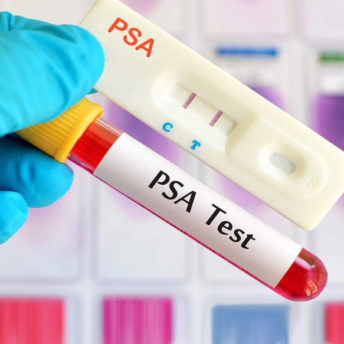
If you’re like most men age 40+, you probably get your PSA (prostate specific antigen) test when you go for a physical that includes a blood draw. You learned either from your doctor, or a health promotion, that men should get a baseline PSA at age 45 (40 if you have known risk factors) and keep reading
Matt Mullenweg, the originator of the popular open source WordPress software, has been quoted as saying, “Whenever there’s a new form of media, we always think it’s going to replace the old thing, and it never does. We still have radio, however long after TV was introduced.” It can be just as true in medicine. keep reading
The New York Times, like all news media, is a vehicle to air conflicting views. The November 25, 2014 issue ran a strongly-worded editorial opinion piece by Richard Ablin, PhD, the self-proclaimed “discoverer of PSA”... keep reading
For radiologists, no professional meeting is more exciting than the annual Radiological Society of North America (RSNA) meeting. Don’t let “North America” mislead you. This Chicago-based event opens on the Sunday after Thanksgiving and runs for six days. As the largest global medical conference, it draws tens of thousands of attendees from all over the keep reading
In case you missed my previous blog, I attended the Radiological Society of North American (RSNA) meeting in Chicago. Several poster presentations were devoted to multiparametric MRI of the prostate. In my last blog, I summarized a poster on mpMRI and imaging of the anterior zone of the prostate. This time, I’m reporting on another keep reading
Once we receive this secure information, a member of our team will be in touch with you as soon as possible to schedule your consultation.
Managing Prostate Cancer Anxiety
A free guide from Sperling Prostate Center

Anxiety after an elevated PSA or a new diagnosis is normal, and more common than most men realize. This free guide covers how stress affects the body and a few simple skills for managing it.