SUMMARY:
Prostate cancer develops when DNA damage causes prostate cells to grow abnormally, and oxidative stress from free radicals is a factor that contributes to these changes. Research has not shown that antioxidant supplements prevent prostate cancer, but diets rich in fruits, vegetables, and other antioxidant-containing foods may help support the body’s natural protective mechanisms. Healthy lifestyle habits remain the most consistently recommended strategy for reducing prostate cancer risk.
What is prostate cancer?
Prostate cancer is the growth of abnormal cells in the prostate, a small gland that sits directly below the bladder in men. It is the most common non-skin cancer in men. Prostate cancer can occur when a prostate cell’s DNA mutates (changes) and the cell starts to multiply aggressively.
As cancer cells multiply, they use the body’s resources to fuel their growth. If left untreated, a prostate cancer tumor can become large enough to penetrate the outer edges (capsule) of the gland. From there, the cancer cells may spread locally, regionally, and eventually to bones and other organs.
However, if prostate cancer is found early when it is still localized and not yet very aggressive, it is highly treatable. The Sperling Prostate Center specializes in treating localized prostate cancer tumors using minimally invasive, targeted treatments like Focal Laser Ablation that have low risk of side effects.
What causes prostate cells to mutate?
Certain DNA mutations in a prostate cell cause the uncontrollable behavior called cancer. DNA is a molecule that is like an instruction manual. It programs the cell’s operations, functions, and natural cell death. However, the DNA molecule is not impervious to damage or corruption over time.
Therefore we might ask, “What causes a cell’s DNA to become damaged?” The table below lists known factors that can damage or corrupt DNA.
| Factor | Description |
| Age | As a person ages, DNA is subject to oxidative stress due to free radicals (oxidants). Damage to DNA leads to errors in the cell’s program. Some of these errors lead to cancer. Thus, most prostate cancer occurs as men grow older. |
| Inherited genetics | It is estimated that 10-15% of prostate cancers have a hereditary component, an inherited gene or genes that prevent natural DNA repair mechanisms, or protect mutated cells from the body’s defenses. |
| Acquired mutations | When a cell duplicates itself, some genes may break down. These are called copy errors and may trigger rogue behavior. |
| Chronic inflammation | Unhealthy lifestyles (poor diet, lack of exercise, poor sleep, etc.) foster the release of free radicals (oxidants) that cause oxidative stress on DNA leading to structural damage. |
| Obesity | Too much fat in the body disrupts normal cell function, forcing cells to divide rapidly and overriding the body’s natural defenses. |
| Hormones | Hormones are chemical messengers that affect cell behavior. In the case of prostate cancer, testosterone and other male hormones help drive prostate cell division, increasing the chances for duplication errors. |
How can I protect against DNA damage?
One of the best ways to protect against DNA damage is to counteract the effects of free radicals. Free radicals are a fact of life. In fact, “our bodies’ cells produce highly reactive substances that contain oxygen. Overproduction of these substances can lead to a condition called ‘oxidative stress,’ which may damage cells and contribute to chronic diseases such as heart disease and cancer.”[i]
Oxidative stress from free radicals (oxidants) can compromise DNA instructions. When free radicals corrupt DNA, it starts a molecular chain reaction within the cell, and between cells. On the other hand, antioxidants protect cells and their DNA.
According to Harvard Health,
"Antioxidant" is a general term for any compound that can counteract unstable molecules called free radicals that damage DNA, cell membranes, and other parts of cells. Because free radicals lack a full complement of electrons, they steal electrons from other molecules and damage those molecules in the process. Antioxidants neutralize free radicals by giving up some of their own electrons.
Some comparisons liken oxidative stress on DNA with the kind of rust that develops on metal. Just as rust gradually erodes the strength of the metal, free radicals erode DNA. However, metal can’t repair itself, while the body has “preventive and repair mechanisms that regulate oxidative stress pathways.”[ii]
Thus, antioxidants play a key role in supporting the body’s protective and preventive mechanisms.
Can antioxidant supplements prevent prostate cancer?
It seems logical that using antioxidant supplements could neutralize the DNA damage that can lead to prostate cancer. Unfortunately, there is no proof that this works. Studies with specific antioxidant supplements such as selenium and vitamin E failed to show any benefit.[iii]
In fact, Mother Nature knows better. Through our natural defenses, our bodies make antioxidants. Additional antioxidants come from the food we eat. Many foods are very high in antioxidants, and our bodies are designed to best obtain what they need to keep our immune systems in good working order.
However, trouble starts when free radicals outweigh antioxidants and the defense systems that repair or prevent DNA damage. It’s easy to unwittingly overload our bodies with more than they can handle.
An unhealthy lifestyle burdens the body, taxing it to the limit of self-protection and combatting free radicals. Poor diet (fats, sugars, fast foods, processed foods, heavy on red meat, light on vegetables, whole grains, fruits, etc.) generates free radicals; lack of exercise generates free radicals; smoking, pollution, toxins in water, and plastic nanoparticles generate free radicals. Not to mention stress.
When it comes to preventing prostate cancer, experts consistently emphasize the value of healthy lifestyle. The body is designed to profit from food high in antioxidants. The landmark study by Dr. Dean Ornish demonstrated how a noninflammatory diet, regular exercise, stress management, and social support had a significant positive impact on the genes that influence prostate cancer.[iv]
That said, though the Ornish study included selenium and vitamin E supplements, both of which have now proven to add no prostate cancer value, here are a few compounds with protective potential seen in small studies:
- Lycopene (cooked tomatoes are especially high in lycopene)[v]
- Green tea extract[vi]
- Pomegranate seed extract[vii]
While some studies are promising, the evidence is not conclusive and larger studies are needed.
What does the Sperling Prostate Center recommend?
The Sperling Prostate Center is committed to the whole person, not just his prostate. The Center’s blogs consistently promotes a wellness-oriented lifestyle to reduce the risk of prostate cancer—and to live a long and healthy life. Dr. Sperling embraces the principle, “What’s good for the heart is good for the prostate, and vice versa.”
Thus, the Center recommends the protective and preventive benefits of the following:
- An anti-inflammatory diet like the Mediterranean diet
- A regular exercise program (preferably at least 30 minutes three times per week)
- Stress management
- A caring support network
For examples, interested readers can find research-based blogs on the Mediterranean diet, plant-based eating, exercise, stress, relationship, supplements, spirituality, and more.
In conclusion, if you want to counteract the harmful effect of free radicals on the DNA of prostate cells, load up on healthy, fresh foods high in antioxidants. Don’t overlook how exercise helps generate your body’s own antioxidant enzymes, and reduce general stress through relaxation and caring support.
Frequently Asked Questions
Q: Is saw palmetto a good supplement for prostate health?
A: As recently as a decade ago, saw palmetto was viewed as a kind of herbal superhero, especially for men with BPH (normal aging-related noncancerous prostate enlargement) that interfered with urinary function. Since then, studies have shown little efficacy for reducing BPH by taking saw palmetto. Even so, it remains a popular men’s health product for its anti-inflammatory properties. Urologic surgeon Dr. Heidi Rayala states, “Saw palmetto is unlikely to harm you, but it probably won’t provide any major benefits either.”
Q: Is there a general guideline about taking supplements?
A: Probably the best guideline is, “Do your homework.” Supplements are not regulated but labels should include active ingredients, dosage/serving size, and any other ingredients. The National Institutes of Health reminds consumers, “Some dietary supplements can help you get adequate amounts of essential nutrients if you don’t eat a nutritious variety of foods. However, supplements can’t take the place of the variety of foods that are important to a healthy eating routine.” Most importantly, ignore sweeping claims and advertisements. Talk to your doctor before adding supplements to your diet, and always investigate the manufacturer.
Q: Can some supplements be harmful?
A: Good question. Did you know there are over 100,000 supplements on the market? The American Medical Association cautions, “While vitamins and nutritional or dietary supplements might be beneficial to your health, they can also cause health risks.” That’s partly because manufacturers can introduce pretty much anything they think is safe. The FDA doesn’t regulate the ingredients, only the advertised claims. Two harmful risks with taking supplements are a) active ingredients that may conflict with other drugs you’re taking, and b) potential toxicity in terms of not knowing the cumulative effect of what you’re taking, or taking it in ways not indicated on the label. As always, discuss any supplement use with your doctor.
NOTE: This content is solely for purposes of information and does not substitute for diagnostic or medical advice. Talk to your doctor if you are experiencing pelvic pain, or have any other health concerns or questions of a personal medical nature.
References
[i] “Antioxidant Supplements: What You Need to Know.” National Center for Complementary and Integrative Health. Accessed May 31, 2026. https://www.nccih.nih.gov/health/antioxidant-supplements-what-you-need-to-know
[ii] Ibid.
[iii] Nicastro HL, Dunn BK. Selenium and prostate cancer prevention: insights from the selenium and vitamin E cancer prevention trial (SELECT). Nutrients. 2013 Apr 3;5(4):1122-48.
[iv] Ornish D, Magbanua MJ, Weidner G, Weinberg V et al. Changes in prostate gene expression in men undergoing an intensive nutrition and lifestyle intervention. Proc Natl Acad Sci U S A. 2008 Jun 17;105(24):8369-74.
[v] Moran NE, Thomas-Ahner JM, Wan L, Zuniga KE et al. Tomatoes, Lycopene, and Prostate Cancer: What Have We Learned from Experimental Models? J Nutr. 2022 Jun 9;152(6):1381-1403.
[vi] Soghrati Salek Moalemi SF, Safari F, Ahvati H. Suppression of Cellular Proliferation in PC3 Prostate Cancer Cells by Green Tea Extract Through Induction of miR-34a Expression. Food Sci Nutr. 2025 May 6;13(5):e70215.
[vii] Guzmán-Lorite M, Muñoz-Moreno L, Marina ML et al. Assessment of the effect of pomegranate seed extracts on prostate cancer through cellular and animal models. Sci Rep. 2025 Jul 1;15(1):20379.
About Dr. Dan Sperling
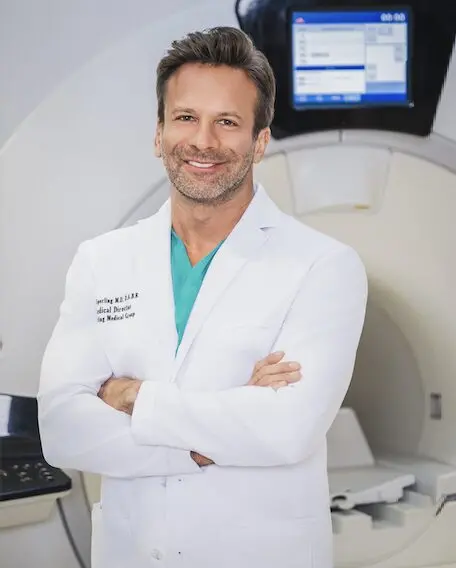
Dan Sperling, MD, DABR, is a board certified radiologist who is globally recognized as a leader in multiparametric MRI for the detection and diagnosis of a range of disease conditions. As Medical Director of the Sperling Prostate Center, Sperling Medical Group and Sperling Neurosurgery Associates, he and his team are on the leading edge of significant change in medical practice. He is the co-author of the new patient book Redefining Prostate Cancer, and is a contributing author on over 25 published studies. For more information, contact the Sperling Prostate Center.