
Did you know? Of nearly 300,000 new cases of prostate cancer in the U.S. each year, more than half will be low-to-intermediate disease. Most of the time, patients will be recommended to have conventional whole gland (radical) treatments by surgery or radiation, while many low-to-very low risk patients will be encouraged to consider monitoring by Active Surveillance.
Either approach seems to offer roughly equal initial cancer control but both strategies have downsides.
Focal therapy has been referred to as the male lumpectomy, a rational middle ground, or even a happy medium. No matter what you call it, there are certain principles that set focal therapy apart from whole gland treatments like surgery and radiation. These same principles likewise distinguish it from Active Surveillance.
Radical treatments bring risks of incontinence, ED, radiation toxicity for bladder and bowel, and side effects of hormone therapy. On the other hand, AS comes with strict compliance of monitoring protocols, high conversion rates to definitive treatment, higher risk of PCa spread than active treatment, and psychological impact (anxiety, stress).
As an alternative to either approach, as many as 30% or more will qualify for focal therapy. Focal therapy (FT) has been termed The Male Lumpectomy, a rational middle ground, even a happy medium. No matter what you call it, it is a middle-of-the-road option that is more aggressive than Active Surveillance but not as extreme as a radical intervention.
Focal therapy principles
Here are general principles that characterize focal treatment:
- The treatment target is the index lesion, which is the largest, most aggressive tumor focus (highest Gleason score up to intermediate) and most significant volume
- The index lesion is clearly visible on MRI
- For best cancer control, the index lesion plus an extra margin of safety will be ablated (destroyed)
- Focal therapy does not treat the whole gland. It can be tailored to treat just the tumor; a larger area but less than half the gland; half of the gland or slightly more.
- Consensus criteria specify that the cancer is contained in the gland
Qualifying candidates
Since not all patients are candidates for focal therapy, patients must be thoroughly evaluated. In addition to their clinical factors (PSA, age, biopsy results, MRI visible, any additional tests depending on patient risk factors), the patient must be:
- Willing to cooperate with post-treatment monitoring protocol (similar to Active Surveillance)
- Comfortable with leaving untreated tissue in the prostate.
Benefits of focal treatment
Focal treatment benefits patients in numerous ways. It is minimally invasive, outpatient, and can be done under local or general anesthesia. The effect of treatment is monitored during the procedure, and confirmed immediately after.
Recovery is rapid so patients quickly return to daily activities. While there is not yet a body of long-term cancer control statistics, intermediate term data shows cancer control comparable to whole gland treatments. Yet, unlike whole gland treatments, urinary incontinence rates are close to 0%, while return to baseline erectile function occurs in roughly 80% of patients.
Finally, focal therapy does not close any future treatment options. If prostate cancer recurs, treatment choices include radical treatment or another focal treatment.
Focal treatment methods
There are numerous effective methods for delivering focal treatment. The choice hinges on factors such as prostate size, co-existing health conditions, access to the prostate, possible anatomic abnormalities, etc. The important thing is that for properly evaluated patients, focal therapy is a safe and effective alternative to all-or-none-at-all treatment strategies.
The Sperling Prostate Center offers four FDA-cleared, advanced image-guided focal treatments for prostate cancer: Focal Laser Treatment, MRI-guided focused ultrasound, TULSA, and Transperineal Laser Ablation (TPLA). Thus, under one roof we have the capability to match best treatment with individual needs and preferences. If you or a loved one is interested in learning more, please contact us.
NOTE: This content is solely for purposes of information and does not substitute for diagnostic or medical advice. Talk to your doctor if you are experiencing pelvic pain, or have any other health concerns or questions of a personal medical nature.
About Dr. Dan Sperling
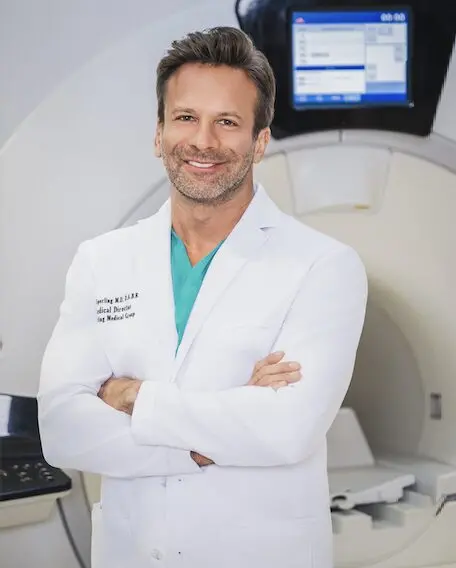
Dan Sperling, MD, DABR, is a board-certified radiologist and founder and Medical Director of the Sperling Prostate Center. He specializes in advanced multiparametric MRI, prostate cancer detection and diagnosis, and MRI-guided focal treatments. A pioneer in MRI-guided Focal Ablation Treatment, Dr. Sperling has contributed to more than 25 published studies and co-authored Redefining Prostate Cancer. His approach emphasizes diagnostic accuracy, personalized treatment, and preservation of quality of life.