
SUMMARY:
Focal therapy for localized prostate cancer provides long-term cancer control comparable to surgery and radiation, according to a 2026 study of 3,477 patients with up to 10 years of follow-up. The findings show extremely low prostate cancer-specific mortality and fewer urinary, sexual, and bowel side effects, supporting focal therapy as an established treatment option for appropriately selected patients.
What is the latest data on focal therapy for prostate cancer?
The latest data on focal therapy for prostate cancer reveals cancer control comparable to radical prostatectomy and radiation therapy, at 10 years after treatment. These are long-term results, and The Sperling Prostate Center says this is great news for patients with localized prostate cancer.
In July, 2026 the journal European Urology published a paper by Light, et al., a multinational team of experts in urology and radiology.[i] The team of authors analyzed 10-year statistics on 3477 cases of patients with localized prostate cancer who had up to two focal treatments.
The authors reported long-term data showing that focal therapy offers durable cancer control with extremely low prostate cancer-specific mortality. Both cryotherapy (freezing) or HIFU (High Intensity Focused Ultrasound) were studied because of their available long-term record in national United Kingdom patient data registries.
Should localized prostate cancer always be treated immediately?
No, not all localized prostate cancer requires immediate treatment, but early detection is essential. When prostate cancer is in its early development, there is little risk of dying from it. It is important, though, to distinguish between insignificant vs. significant prostate cancer.
When early prostate cancer cells do not show aggressive characteristics, if they are still contained in the gland (localized) they are unlikely to spread outside the prostate. This is called insignificant prostate cancer. Most experts believe that insignificant prostate cancer does not need immediate treatment.
However, like all cancers, some prostate cancer cells may mutate and become more aggressive. This means they eventually develop the ability to spread outside the gland. This is called significant prostate cancer, and experts believe it should immediately be treated before it can advance outside the gland.
If I have insignificant prostate cancer, what are my options?
Patients with insignificant prostate cancer have three basic options:
- Immediate whole-gland treatment by either surgically removing the whole gland, radiating the whole gland, or destroying the whole gland by a method called whole-gland ablation
- Immediate treatment by focal therapy followed by a monitoring protocol
- Active Surveillance using a monitoring protocol to detect any change toward aggressiveness
Compare these three approaches:
| Option | 10 yr outcomes for insignificant PCa[ii] | Side effects |
| Prostatectomy (whole gland surgical removal) | 98% cancer-specific survival | Risk of temporary or permanent incontinence and sexual dysfunction |
| Radiotherapy (whole gland radiation, either external beam or brachytherapy seed implants) | 98% cancer-specific survival | Risk of late-onset urinary, sexual or bowel dysfunction Increased risk of secondary cancer (bladder, bowel) |
| Focal therapy (partial or focal ablation) | 98% cancer-specific survival | Very low risk of urinary or sexual side effect, generally temporary |
| Active Surveillance (no immediate treatment, monitor for cancer progression) | 98% cancer-specific survival | Risk of anxiety Risk of missing a potentially curative treatment window if cancer spreads before detection |
How is focal therapy different from whole-gland treatment?
There are two main differences due to the location of the prostate. It is adjacent to other essential structures: the bladder, the rectum, and both nerve/blood vessel bundles that control erection; the urethra that carries urine out of the bladder passes directly through the prostate.
The first difference is side effect risks. Whole-gland treatments come with a risk of harming one or more of these essential structures. This can lead to temporary or permanent urinary, sexual or bowel side effects depending on the treatment. On the other hand, focal therapy is aimed at the index lesion while sparing healthy tissue. This generally avoids affecting other essential structures.
The second difference is ease of treatment and recovery. Prostatectomy requires a short hospitalization and has a longer recovery period, while beam radiation occurs with daily treatment over several weeks. Focal therapy is a minimally invasive, outpatient procedure with rapid return to normal activity.
What the two approaches have in common is durable cancer control. Thanks to the 2026 paper by Light, et al., we now know that at 10 years after treatment, focal therapy and prostatectomy have comparable cancer-free survival rates. Therefore, given similar success with cancer control, focal therapy provides higher quality of life after treatment.
Why is this good news for patients?
The paper by Light, et al. is good news because it demonstrates that focal therapy should no longer be called experimental. As the authors write, ten years after treatment “very few patients had died from prostate cancer and very few had experienced spread of their cancer outside the prostate.” With focal therapy, patients have an effective balance between whole-gland treatment and Active Surveillance.
Dr. Dan Sperling points out that despite many published papers with shorter term results, some experts and insurance carriers have been doubtful that focal therapy produces lasting cancer control.
Dr. Sperling says, “Cryotherapy and HIFU were used for the 10-year analysis because they were early focal methods so they have the longest published track record. Other MRI-guided modalities soon followed, with cancer control rates just as exciting.
“For example, guided by our Center’s 3 Tesla multiparametric MRI, we do Focal Laser Ablation, TULSA, Exablate MR-guided Focused Ultrasound, and Transperineal Laser Ablation. With our diagnostic excellence, we can match treatment choice to each patient’s clinical needs and preferences.”
He adds, “Thanks to this newly published journal article by the Light team, there’s no doubt that focal therapy has earned its place in the menu of effective weapons against localized prostate cancer while having the advantage of high quality of life after treatment.”
Frequently asked questions
Q: Can focal therapy be used to treat intermediate-risk prostate cancer?
A: The short answer is yes, but with qualification. Intermediate risk prostate cancer is defined as Gleason 3+4 (favorable intermediate risk) and Gleason 4+3 (unfavorable intermediate risk). In addition, there are other factors that “fine tune” the assessment: family history, tumor size/location, how visible it is on imaging, the patient’s PSA and PSA density, etc. In short, determining if focal therapy is a feasible option requires thorough and accurate diagnosis. The patient must also commit to the follow-up monitoring schedule to detect new cancer in the untreated prostate areas. Therefore, only a doctor can determine if a patient with localized intermediate risk prostate cancer is a candidate for focal therapy.
Q: What are the most common methods for focal therapy?
A: Today there are several methods that are commonly used in the U.S. to deliver focal therapy. These include Focal Laser Ablation, TULSA, MR-guided Focused Ultrasound, Transperineal Laser Ablation, HIFU, cryotherapy, and NanoKnife (irreversible electroporation).
Q: If cancer comes back after focal therapy, what are the options?
A: Depending on the clinical factors, the options include a whole gland treatment, a repeat focal treatment, or Active Surveillance. A unique benefit of focal therapy is leaving all options open should prostate cancer recur after treatment, assuming that the recurrence is still localized.
Content reviewed by Dr. Dan Sperling, M.D., DABR — updated July 2026
NOTE: This content is solely for purposes of information and does not substitute for diagnostic or medical advice. Talk to your doctor if you are experiencing pelvic pain, or have any other health concerns or questions of a personal medical nature.
References
[i] Light A, Peters M, Gopalakrishnan A, Mayor N et al. Oncological Outcomes Following Focal HIFU and Cryotherapy for Treatment of Nonmetastatic Prostate Cancer in the United Kingdom: An Updated Analysis of 3477 Patients from the Prospective HEAT and ICE Registries. Eur Urol. 2026 Jul 10:S0302-2838(26)02169-X.
[ii] Hamdy FC, Donovan JL, Lane JA, Mason M et al. 10-Year Outcomes after Monitoring, Surgery, or Radiotherapy for Localized Prostate Cancer. N Engl J Med. 2016 Oct 13;375(15):1415-1424.
About Dr. Dan Sperling
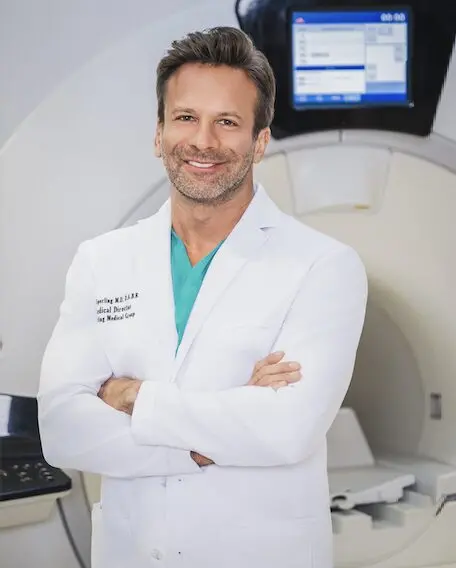
Dan Sperling, MD, DABR, is a board certified radiologist who is globally recognized as a leader in multiparametric MRI for the detection and diagnosis of a range of disease conditions. As Medical Director of the Sperling Prostate Center, Sperling Medical Group and Sperling Neurosurgery Associates, he and his team are on the leading edge of significant change in medical practice. He is the co-author of the new patient book Redefining Prostate Cancer, and is a contributing author on over 25 published studies. For more information, contact the Sperling Prostate Center.