
SUMMARY:
Focal Therapy for localized prostate cancer is based on principles of physical tumor destruction, image guidance, and patient selection. There are four different types of focal therapy methods, and each has a high safety profile with good cancer control and minimal side effect risks. The Sperling Prostate Center offers four treatment methods that bridge the gap between radical treatment and Active Surveillance.
The purpose of this blog is to share the content of a journal review titled “Focal Therapy for Prostate Cancer: State of the Art, Physical Principles, Potentials, and Challenges.”[i] This review gives a comprehensive report on today’s state of the art in focal therapy. The Sperling Prostate Center is proud to provide four different focal treatment methods.
What is Focal Therapy?
The review defines focal therapy as “the selective destruction of prostate areas affected by clinically significant neoplasia (csPCa), sparing healthy glandular tissue, the urethral sphincter, the neurovascular bundles, and the rectum.”
In simpler terms, the goal of focal therapy is to target and destroy a localized prostate cancer tumor while preserving urinary, sexual, and rectal function. Focal therapy has emerged as a standard of care that bridges the gap between radical (whole gland) treatments and Active Surveillance.
What is meant by the gap between radical treatment and Active Surveillance?
For decades, patients diagnosed with low-risk, localized prostate cancer were faced with choosing between two extremes. Either remove or destroy the whole gland (radical treatment) or hold off on treatment and monitor the cancer (Active Surveillance).
Each strategy had risks.
- Radical treatment, with the goal of controlling the cancer, often amounted to over-treating certain low-risk tumors that might never have become dangerous, called indolent tumors. Also, radical treatment came with risks of incontinence (inability to control urine), erectile dysfunction (inability to have an erection), or bowel problems due to damage to the rectum.
- Active Surveillance, with the goal of avoiding the risks of radical treatment as long as possible, came with risks of anxiety due to thoughts of untreated cancer growing in the body, or missing a treatment window if cancer progression wasn’t detected in time.
Thus, focal therapy emerged as a middle ground alternative, offering comparable cancer control to radical treatment while greatly lessening its risks.[ii] This fills the gap between either extreme.
What are the principles of focal therapy?
The key principle of focal therapy is the irreversible ablation (destruction) of cancerous tissue so no living cancer cells are left. It is based on physically applying a controllable form of energy sufficient to kill cancer.
Since no surgery is involved, focal treatments are imaging-guided. The imaging technology is used to plan, guide, monitor and confirm the focal therapy procedure.
Other important principles include carefully qualifying patients for focal therapy, and selecting the method of focal treatment that best matches each patient’s clinical factors and lifestyle.
What are the current methods used to apply focal treatment?
Currently tested and approved focal therapy methods can be classified as thermal (high heat), cold (cryoablation), non-thermal, and radiation-based.
- Thermal – High Intensity Focused Ultrasound (HIFU) creates heat using sonic energy; Focal Laser Ablation (FLA) creates heat using laser light
- Cold – Cryoablation (cryo) creates a rapid “iceball” to freeze tissue at a lethally low temperature
- Non-thermal – Irreversible electroporation (IRE) applies high voltage electric pulses; Vascular targeted photodynamic therapy (VTP) creates tumor death using a photochemical reaction
- Radiation-based – Focal brachytherapy (seed implants) can be strategically placed to gradually cause tumor death while sparing healthy tissue
All current methods are guided by imaging. All are intended to precisely destroy the primary tumor (index lesion) plus a margin of safety. All methods are able to be planned, controlled, and monitored during application. The zone of immediate cell death can be confirmed immediately following treatment (with the exception of focal brachytherapy, which causes gradual cell death over time).
What does research show regarding focal therapy results?
Since the article authors reviewed many published studies from 2000-2026, results were reported as narrative summaries as follows:
- Recurrence-free survival at 12 months is 86%, and at 24 months is 81%.
- Five-year treatment free survival reaches 82%.
- Continence (urinary control) rates range from 92.3% to 100%.
- Sexual function varies with rates as high as 94% after treatment.
Research demonstrates that focal therapy has a highly favorable safety profile with low complication rates, thanks to the minimally invasive nature of procedures. Still, to gain accurate results data over many years, long term studies are needed, with consistent study design and standardized endpoints in order to gather apples-to-apples data.
What are the benefits of focal therapy?
Focal therapy offers the benefits of cancer control with minimal-to-no impact of urinary, sexual and bowel function. Since it is tailored to each patient, individualization increases the probability of treatment success and patient satisfaction. In addition, most patients quickly return to normal activity.
IMPORTANT: Even with the best diagnosis, it’s possible that microscopic cancer cells exist outside the treatment zone. These cells escape detection before treatment. They may never develop into tumors, but the untreated prostate tissue still requires monitoring. The doctor will provide a schedule consisting of PSA tests and MRI at prescribed intervals, and focal therapy patients must comply with this schedule.
Which methods does the Sperling Prostate Center offer?
Dr. Dan Sperling and his team of experts offer Focal Laser Ablation, focused ultrasound using either TULSA-PRO or Exablate (MRI-guided Focused Ultrasound), and Transperineal Laser Ablation (TPLA). Dr. Sperling is a recognized pioneer in multiparametric MRI (mpMRI) and MRI-guided focal therapies. Contact the Center for more information.
Frequently Asked Questions
Q: What are the patient qualifications for focal therapy?
A: Clinically, patients are evaluated based on PSA, multiparametric MRI/PI-RADS score, biopsy, and any additional tests as indicated, such as genomic profiling. Based on all results, patients must have a localized primary tumor (index lesion) with Gleason grade no greater than Gleason 3+4. Only a doctor can qualify a patient for focal therapy. In addition, patients are expected to comply with follow-up monitoring as directed.
Q: What is the recovery time after focal therapy?
A: Recovery will vary from one patient to another depending on the treatment method and the patient’s general health and energy. Most patients literally walk out the door of the treatment center, and return to normal activity within a few days. The doctor will discuss any restrictions.
Q: How will I know which method is best for me?
A: Focal therapy is not a one-size-fits-all prostate cancer strategy. While patients are encouraged to do their own research on each method, the final choice is made between doctor (who knows the patient’s clinical profile) and patient (lifestyle and preference should be taken into account). Matching the treatment to the disease and patient preference increases the probability of both success and patient satisfaction.
Content reviewed by Dr. Dan Sperling, M.D., DABR — updated May 2026.
NOTE: This content is solely for purposes of information and does not substitute for diagnostic or medical advice. Talk to your doctor if you are experiencing pelvic pain, or have any other health concerns or questions of a personal medical nature.
References
[i] Orecchia L, Staffani S, Micillo A, Miano R, Walser E, Manenti G. Focal Therapy for Prostate Cancer: State of the Art, Physical Principles, Potentials, and Challenges. Cancers 2026, 18, 1523. https://doi.org/10.3390/cancers18101523.
[ii] Shah TT, Reddy D, Peters M, Ball D et al. Focal therapy compared to radical prostatectomy for non-metastatic prostate cancer: a propensity score-matched study. Prostate Cancer Prostatic Dis. 2021 Jun;24(2):567-574.
About Dr. Dan Sperling
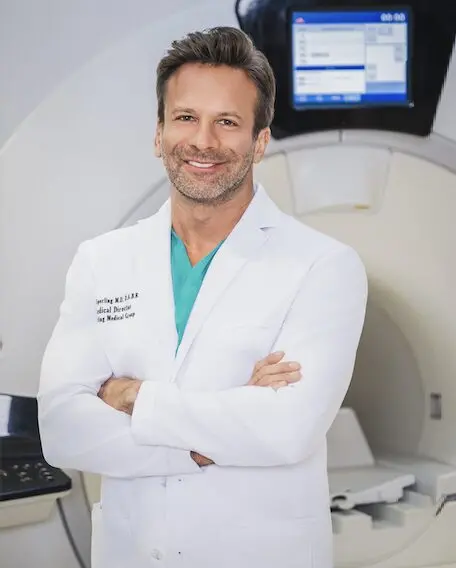
Dan Sperling, MD, DABR, is a board certified radiologist who is globally recognized as a leader in multiparametric MRI for the detection and diagnosis of a range of disease conditions. As Medical Director of the Sperling Prostate Center, Sperling Medical Group and Sperling Neurosurgery Associates, he and his team are on the leading edge of significant change in medical practice. He is the co-author of the new patient book Redefining Prostate Cancer, and is a contributing author on over 25 published studies. For more information, contact the Sperling Prostate Center.