
Not long ago, a patient asked me, “With all the advances in science, why haven’t we found a cure for cancer?” I said I wished I knew why, and simply admitted I had no answer.
It’s been 55 years since the War on Cancer was launched with President Nixon signing the National Cancer Act. Over a trillion dollars has been spent so far, and cancer is still very much with us—and increasing. According to a blog posted by Provectus Pharmaceuticals, between 1992 and 2022.
- “More people got cancer,
- Less people died,
- More money was spent on cancer research and drug development, just by the federal government, and
- We’ve not even begun to talk about the life and financial toxicity from cancer treatments themselves.”
At the Sperling Prostate Center, we are dedicated to improving outcomes for prostate cancer patients by controlling their disease through MRI-guided focal treatment, while minimizing treatment side effects. My blogs are primarily dedicated to prostate cancer detection, diagnosis and treatment. At the same time, I regularly post information on wellness habits that linked with discouraging prostate cancer from starting, and slowing its progression if it has already begun.
Most important is awareness of the importance of early detection. Unlike my patient who asked why we haven’t found a cure, I personally wonder, “Why aren’t 100% of men over 40 getting an annual PSA test?” I want to broadcast “Do not fear the PSA test!” The problems of overdetection, overbiopsy and overtreatment due to rushing from a suspicious PSA result to a needle biopsy are gone. Multiparametric MRI before biopsy has taken the “cons” out of the pros and cons of PSA screening. It’s only “pros” now.
Celebrities drive the message home
In spite of studies showing that early detection of prostate cancer saves lives, and in spite of the awareness efforts of the Prostate Cancer Foundation, Zero Prostate Cancer, Prostate Cancer Awareness Month etc., rates of PSA screening continue to zigzag, but never reach a universal number much over 50%. I have found this discouraging but I will continue to carry the banner.
Now, at the dawn of 2026, I came across an encouraging January 3 article by OncoDaily (a free global digital media platform dedicated to the field of cancer) titled, “A Year in Cancer: Notable Celebrity Cancer Diagnoses of 2025.” As I read through the brief stories of famous people diagnosed with cancer, I realized that the need for early detection is more in the public eye than I may think.
Here are the individuals profiled in the article:
- British singer Jesse J openly spoke about her breast cancer diagnosis, emphasizing that it was caught early. The article emphasized that her dignified, hopeful tone of her disclosure “carried cultural impact” in raising awareness that early detection saves lives.
- President Joe Biden’s diagnosis of aggressive, metastatic prostate cancer was certainly a tragic irony, given his longtime advocacy for cancer research. Yet his is a cautionary tale, underscoring that “advanced disease is often diagnosed late due to subtle or overlooked symptoms.”
- Celebrity chef Gordon Ramsay’s surgery to remove a skin cancer became his opportunity to emphasize the importance of preventing cancer. In his case, he used his “personal health experiences to reinforce evidence-based prevention” through daily use of sunscreen and other simple protective measures.
- U.S. Senator Ben Stasse’s diagnosis of incurable pancreatic cancer brought to light the role of values in dealing with cancer: family, faith and frankness. It also reminds us that some cancers are silent killers with no early warning signs and no effective screening tests. In the case of pancreatic and other cancers, early detection “remains elusive and therapeutic progress incremental, his story highlighted both the urgency of continued research and the human cost of delayed diagnosis.”
It is not yet possible to prevent cancer from occurring, nor possible to cure all cancer. These four celebrities carry positive messages. I particularly want to point out that it IS possible to detect most cancers early, especially with today’s screening tests.
The American Cancer Society offers screening guidelines for several cancers. Regarding prostate cancer, they support the 2018 position of the U.S. Preventive Service Task Force:
- Starting at age 50, men should talk to a health care provider about the pros and cons of testing so they can decide if testing is the right choice for them.
- If you are African American or have a father or brother who had prostate cancer before age 65, you should have this talk with a health care provider starting at age 45.
- If you decide to be tested, you should get a PSA blood test with or without a rectal exam. How often you’re tested will depend on your PSA level.
I don’t disagree with their guidelines, but I would update them. As far as “pros and cons”, as I said earlier multiparametric MRI has erased the “cons.” There’s no need to fear overdetection and overbiopsy. Also, if a screener insists on a rectal exam, the blood draw MUST come first. Stimulating the prostate gland causes PSA to rise, so the rectal exam should come after the blood draw.
In closing, I encourage every man approaching midlife to get a baseline PSA, and then make a habit of repeating it every year. When found early, it’s possible to get 100% success treating prostate cancer.
NOTE: This content is solely for purposes of information and does not substitute for diagnostic or medical advice. Talk to your doctor if you are experiencing pelvic pain, or have any other health concerns or questions of a personal medical nature.
About Dr. Dan Sperling
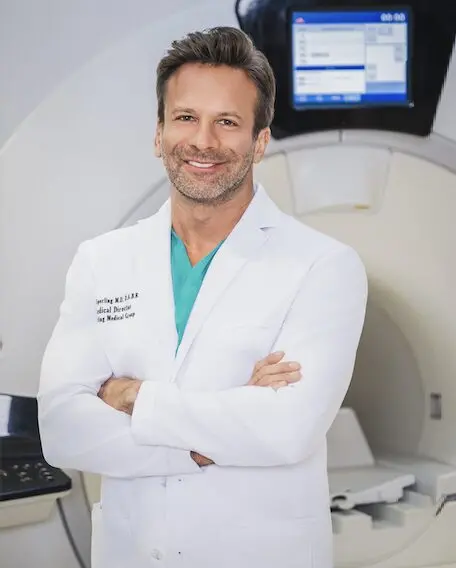
Dan Sperling, MD, DABR, is a board certified radiologist who is globally recognized as a leader in multiparametric MRI for the detection and diagnosis of a range of disease conditions. As Medical Director of the Sperling Prostate Center, Sperling Medical Group and Sperling Neurosurgery Associates, he and his team are on the leading edge of significant change in medical practice. He is the co-author of the new patient book Redefining Prostate Cancer, and is a contributing author on over 25 published studies. For more information, contact the Sperling Prostate Center.