
The year 2000 was the start of a new millennium. Back then, the primary treatment for localized prostate cancer was prostatectomy. Most urologists still view it as the gold standard of potentially curative treatment options. Beam radiation and brachytherapy were in second place, and whole gland cryotherapy was emerging for patients who did not want or could not have surgery or radiation.
An interesting article from 2001 sheds light on what patients liked about available treatment options:
The most common reasons for liking a treatment were removal of tumor for radical prostatectomy (RP), evidence for external beam radiation (EBRT) and short duration of therapy for brachytherapy (seeds) (n = 25). The most frequently cited dislikes were high risk of incontinence for RP, long duration of therapy for EBRT, and lack of evidence for seeds.[i]
The changing landscape
A mere 25 years later, the landscape has changed significantly. Surgery for low-risk prostate cancer is trending lower. A June 2025 news story from MedPageToday reports, “The number of prostatectomies performed in the United States for low grade cancer has fallen precipitously over the past 2 decades, according to data from two large prostate cancer cohorts.” Compare differences over time.
| Year | 2000 menu | 2026 menu |
| Treatment options for localised PCa | Whole gland treatments
|
Whole gland treatments
Partial/focal gland treatments
|
| Nontreatment options for localised PCa | Watchful waiting | Active Surveillance |
A whole new world
When you compare the two, it is obvious that today’s treatment trend offers a greatly expanded menu of possibilities. It’s like a whole new world. Until the new millennium, clinical trends generally changed at a snail’s pace. However, several factors during the first quarter century of 2000 have generated what is virtually a rapid revolution in the world of prostate cancer detection, diagnosis, and treatment.
Consider these influences:
- Weak evidence that treatment improves survival – In 2001, Holmboe & Concato wrote, “Despite many therapeutic options, no definite evidence exists that any modality reduces mortality from prostate cancer.”[ii] That picture was decisively validated in 2016 by the ProtecT Trial, which showed that for localized prostate cancer, active monitoring had a 15-year 97% PCa-specific survival rate, statistically identical to post-surgery and post-radiation rates.[iii]
- Patient and physician awareness that whole gland treatments come with risks of side effects that impair quality of life, usually up to 18 months but in many cases longer or even permanent.
- Advent of multiparametric MRI (mpMRI) – Advanced imaging that identifies suspicious lesions led to more accurate diagnosis of existing prostate cancer tumors; at the same time, it eliminated the harms of PSA screening. Increased screening plus mpMRI has led to earlier identification of what does or does not require biopsy, leading to greatly reduced biopsies.
- More precise biopsy (in-bore MRI-guided targeted biopsy) has led to more accurate diagnosis. Diagnosing early and low-risk tumors qualifies patients for focal therapy or Active Surveillance.
- Increased use of focal treatment and Active Surveillance – ever-growing numbers of patients with low-risk prostate cancer want to avoid the risks of immediate whole gland treatment. Active Surveillance satisfies that desire for properly qualified patients, and for those who don’t want the anxiety associated with Active Surveillance, focal treatment offers excellent cancer control with low-to-no side effect risks.
There is still a place for whole gland treatments like prostatectomy, radiation, and whole gland ablation. In fact, with better and more accurate imaging and diagnosis of high risk localized prostate cancer, the rates of radical treatments for these cases have risen.
Matching treatment to disease
The availability of a more extensive menu of treatments supports the trend toward matching treatment to disease. Research demonstrates that thorough diagnosis which takes all clinical factors into account allows customizing treatment to each patient’s needs and preferences. In turn, with early diagnosis, treatment has the greatest chance of success.
The Sperling Prostate Center provides top-tier MRI-guided detection, biopsy, and focal treatment. We are in the vanguard of current prostate cancer treatment services. Contact us to learn more.
NOTE: This content is solely for purposes of information and does not substitute for diagnostic or medical advice. Talk to your doctor if you are experiencing pelvic pain, or have any other health concerns or questions of a personal medical nature.
References
[i] Holmboe ES, Concato J. Treatment decisions for localized prostate cancer: asking men what’s important. J Gen Intern Med. 2000 Oct;15(10):694-701.
[ii] Ibid.
[iii] Hamdy FC, Donovan JL, Lane JA, Mason M et al. 10-Year Outcomes after Monitoring, Surgery, or Radiotherapy for Localized Prostate Cancer. N Engl J Med. 2016 Oct 13;375(15):1415-1424.
About Dr. Dan Sperling
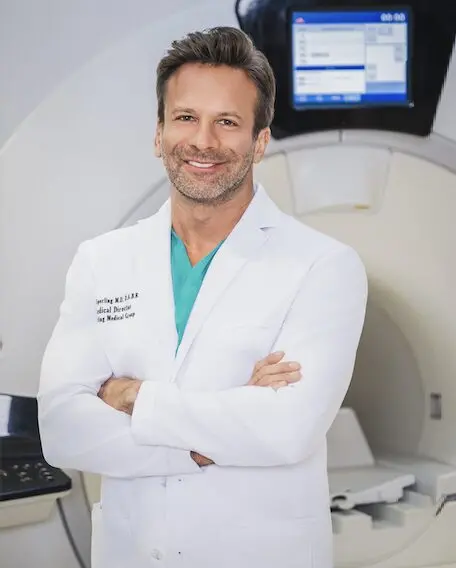
Dan Sperling, MD, DABR, is a board certified radiologist who is globally recognized as a leader in multiparametric MRI for the detection and diagnosis of a range of disease conditions. As Medical Director of the Sperling Prostate Center, Sperling Medical Group and Sperling Neurosurgery Associates, he and his team are on the leading edge of significant change in medical practice. He is the co-author of the new patient book Redefining Prostate Cancer, and is a contributing author on over 25 published studies. For more information, contact the Sperling Prostate Center.