I came across a blog posted by prostatecancer.net that I thought was worth passing along. In case you haven’t heard about it, ProstateCancer.net is an online community for men with prostate cancer and their loved ones.
This site is part of a huge digital health community called Health Union. It is designed to generate free support and information for patients and their care teams. It has over 125 communities, each focused on a specific health condition like migraine and Parkinson’s disease. Their information is trustworthy because it is curated and edited for accuracy. Besides the abundance of articles, visitors can sign up to participate in conversations among members, similar to prostate cancer forums on Reddit and Inspire.
The blog I mentioned is titled “8 Myths About Prostate Cancer.” Five of them are of particular interest to me. Here are the myths, and I’ve added my “two cents” to each of them:
- Can vasectomy cause prostate cancer? The blog acknowledges that a large 2011 analysis found a correlation between vasectomy and increased prostate cancer risk, though subsequent research is mixed. The blog goes on to state that prostate cancer is caused by mutations within a cell, though no one knows exactly what triggers them. My two cents: My own blog brings to light two recent analyses that do find a correlation, but notes that correlation does not necessarily mean causality. In any case, the risk of vasectomy “causing” prostate cancer appears very small.
- Is surgery the only treatment option for prostate cancer? The blog clearly states that there are numerous treatment choices, and that a treatment plan should be developed for each individual’s situation. It also notes that possible side effects should be taken into account. My two cents: The choices mentioned all imply whole-gland treatment. It’s unfortunate that there is no mention of focal therapy approaches like Focal Laser Ablation and other methods, which destroy the cancer while offering the least risk of urinary and sexual side effects.
- Will treatment ruin my sex life? In keeping with mention of treatment side effects, the blog goes more deeply into the potential impact of whole gland or systemic treatments on a man’s sexual function. It points out that erectile dysfunction can diminish quality of life, and even mentions mental health, stating that the use of Active Surveillance is on the rise so men can avoid such risks as long as possible. My two cents: Again, this would have been a good place to include focal treatment as a balanced alternative to whole-gland vs. no treatment, in order to preserve sexual function while killing the cancer (see my blog)
- Will my experience be the exact same as others? The blog rightly declares that each man’s journey with prostate cancer will depend on many factors that make his situation unique. Some of the factors are his age at diagnosis, risk level of his cancer, type of treatment, emotional factors, even things like ethnicity, sexual identity, etc. and concludes that “it is completely normal to expect that no two people will deal with their prostate cancer in the same way.” My two cents: Just as each person’s case is individualized, there is no one-size-fits-all treatment choice. Treatment should be tailored to both the cancer itself, and the patient’s lifestyle considerations. Check out my blog on the perfect prostate cancer treatment.
- Will changing my diet cure prostate cancer? The blog synthesizes key points. First, eating a healthy diet helps your body fight off disease and keep you in better shape to deal with a prostate cancer journey should it happen to you. Second, studies have explored how healthy eating might help lower prostate cancer risk. Third, there is no evidence that diet can actually cure prostate cancer. My two cents: At the Sperling Prostate Center, we care about the whole person. We embrace the philosophy that what’s good for the heart is good for the prostate and vice versa. I have published many blogs on the importance of non-inflammatory diets because the evidence is out there that diet makes a difference.
I hope these insights help debunk common myths about prostate cancer, and resolve the kinds of questions patients ask.
NOTE: This content is solely for purposes of information and does not substitute for diagnostic or medical advice. Talk to your doctor if you are experiencing pelvic pain, or have any other health concerns or questions of a personal medical nature.
About Dr. Dan Sperling
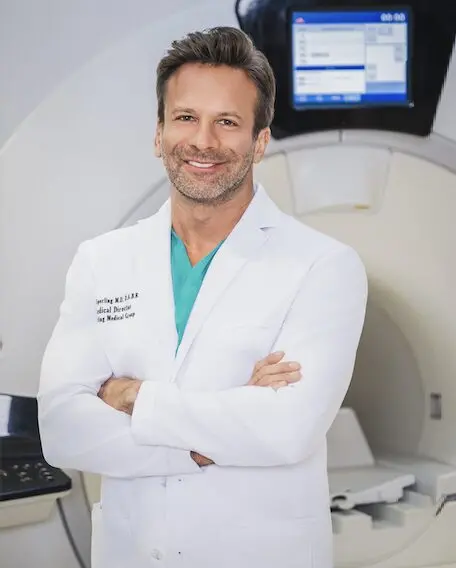
Dan Sperling, MD, DABR, is a board certified radiologist who is globally recognized as a leader in multiparametric MRI for the detection and diagnosis of a range of disease conditions. As Medical Director of the Sperling Prostate Center, Sperling Medical Group and Sperling Neurosurgery Associates, he and his team are on the leading edge of significant change in medical practice. He is the co-author of the new patient book Redefining Prostate Cancer, and is a contributing author on over 25 published studies. For more information, contact the Sperling Prostate Center.