
SUMMARY:
Modern focal therapy for localized prostate cancer became possible through improvements in multiparametric MRI, MRI-guided targeted biopsy, and a better understanding of how prostate tumors progress. By treating only the dominant cancer lesion, focal therapy aims to preserve quality of life while providing cancer control comparable to whole-gland treatment for appropriately selected patients. The Sperling Prostate Center offers several MRI-guided focal therapy options tailored to each patient’s diagnosis and treatment goals.
Before focal therapy, what were the standard prostate cancer treatments?
Before focal therapy came into being, there were only two standard treatment options for localized prostate cancer: either radical treatment, or Watchful Waiting (now called Active Surveillance). As the treatment has evolved, the Sperling Prostate Center offers state-of-the-art focal therapy as an alternative to radical treatment and Active Surveillance.
What is radical treatment?
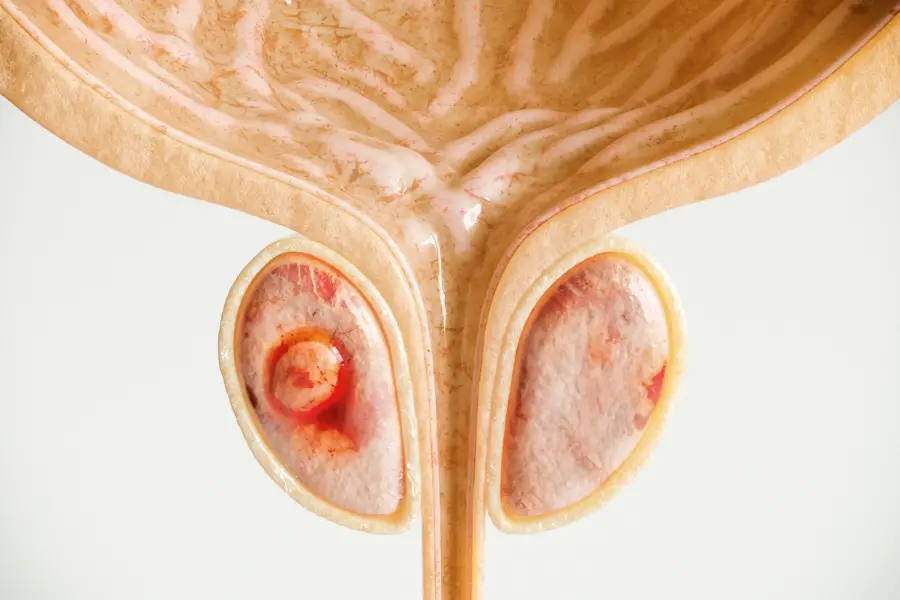
Radical means involving the entire gland. In principle, as long as the cancer is still contained in the prostate, treating the whole gland would in principle remove or destroy the cancer along with the prostate. Here you can see an artist’s conception of a prostate gland containing a tumor:
Currently there are three standard approaches to radical treatment:
- Radical prostatectomy
- Radiation therapy (also called radiation or radiotherapy)
- Whole gland ablation
Radical treatments have side effect risks that may include urinary, sexual or bowel dysfunction. A small risk of radiation scatter is new secondary cancers (e.g., bladder or bowel cancer). If cancer comes back after radical treatment, it may be due to undetectable cancer cells that had already begun to spread. If so, systemic treatments like hormone therapy are used to keep the cancer in control.
What is Watchful Waiting?
Watchful Waiting is an older term for holding off on treatment. It was often prescribed for patients who were not candidates for radical treatment due to age or co-existing medical conditions, based on the assumption that most prostate cancer is slow growing.
Watchful Waiting consisted of patients tracking any symptoms for cancer growth (becoming larger) or progression (becoming dangerously aggressive). A rise in PSA was also interpreted as new cancer activity, so typically a biopsy was done. If positive, systemic therapy would be used to slow the cancer.
Today, Active Surveillance replaces Watchful Waiting. Active Surveillance involves both PSA and mpMRI to eliminate unnecessary biopsy.
Active Surveillance is now widely prescribed for patients with low-risk localized prostate cancer to avoid the risks of radical treatment. However, new cancer activity (rise in PSA, suspicious lesion seen on MRI) warrants a targeted biopsy. If the cancer has progressed, it triggers a move to treatment.
Given the above choices, where did focal therapy come from?
Focal therapy emerged in the late 1990s as a result of the desire, shared by both doctors and patients, to maximize cancer control while reducing side effect risks. Ideally, the cancer is destroyed and high quality of life is preserved. Three evolving scientific areas made focal therapy possible.
First, new biology research identified the index lesion as the primary driver of disease progression. Even if one or more very small cancer locations exist, the index lesion is the largest focus of tumor. It is targeted for treatment since it is most likely to contain significant cancer cells.
Second, advances in multiparametric MRI make this imaging the cornerstone of focal therapy. It enables targeted biopsy into the index lesion, and it allows treatment planning, tumor targeting, monitoring during ablation, treatment confirmation, and post-treatment monitoring. As described by Franco, et al. (2026), it creates a “tight integration between imaging and therapy…”[i]
Third, better PSA screening practices that involve MRI follow-up can now clarify if a biopsy is needed. By avoiding unnecessary biopsy, more men are willing to participate in PSA screening. This has led to an increase in very early detection, when tumors are most amenable to successful focal therapy.
Which patients are likely to choose focal therapy?
Men diagnosed with localized prostate cancer are likely to choose focal therapy when they want cancer control that has the least risk of urinary incontinence, sexual dysfunction, and bowel problems.
Although no prostate cancer treatment can guarantee 100% cancer control and 100% freedom from side effects, focal therapy for appropriate patients offers comparable treatment success to prostatectomy but with few to no side effects.
Also, many patients who clinically qualify for Active Surveillance will often choose a focal therapy. These are patients who are not comfortable with the idea of cancer growing in their body but they don’t want a radical treatment. Active Surveillance has risks of anxiety and missing a treatment window.
In all cases, patients must be accurately diagnosed with localized prostate cancer and an index lesion that is visible on MRI. Such diagnosis is best achieved by experienced practitioners using powerful multiparametric MRI, and in-bore MRI guided targeted biopsy.
Does the Sperling Prostate Center offer focal therapy?
Yes, the Sperling Prostate Center offers several precision focal therapy methods. Dr. Dan Sperling and his team of experts are equipped with a state-of-the-art powerful 3 Tesla magnet for accurate detection, diagnosis, and MRI-guided treatment of localized prostate cancer.
Dr. Sperling is a recognized pioneer of in-bore MRI guided targeted biopsy, and Focal Laser Ablation. His Center has also added FDA-cleared focal TULSA, Exablate (MR-guided focused ultrasound), and TPLA (Transperineal Laser Ablation).
Dr. Sperling states, “We are proud to provide a suite of focal therapy methods so we can match the type of ablation to each individual. By integrating his clinical needs with his lifestyle preferences, we tailor focal therapy to the patient.” For more information, contact the Sperling Prostate Center.
Frequently asked questions (FAQ)
Q: When exactly did focal therapy start?
A: Today’s focal therapy traces its roots back to the late 1990s, when a handful of interventional radiologists and urologists were cautiously using ultrasound-guided focal cryotherapy (freezing) to patients who did not want radical treatment and Watchful Waiting. Although frequently scorned by the urology establishment, these doctors were eventually able to publish their high success numbers and low side effect rates.[ii] In the early 2000s, word spread among patients. As demand increased, and results began being published and presented at professional meetings, more doctors began to offer focal cryo. Eventually, multiparametric MRI and additional ablation technologies led to today’s focal therapy.
Q: What is the future of focal therapy?
A: Focal therapy is here to stay. With the addition of biomarker tests and genomic classifiers, it is expected that patient selection will continue to become even more accurate. Panels of experts rely on consensus methods to establish criteria for designing apples-to-apples clinical study protocols, patient selection, MRI scoring using PI-RADS, monitoring treatment success following focal treatment, and managing recurrence if cancer returns after focal treatment. New imaging methods are also in development to improve detection and qualifying patient methods. In short, the future is bright.
Content reviewed by Dr. Dan Sperling, M.D., DABR — updated June 2026
NOTE: This content is solely for purposes of information and does not substitute for diagnostic or medical advice. Talk to your doctor if you are experiencing pelvic pain, or have any other health concerns or questions of a personal medical nature.
References
[i] Franco, A., de la Rosette, J. & De Nunzio, C. Focal therapy for localized prostate cancer: not all that glitters is gold. Prostate Cancer Prostatic Dis (2026). https://doi.org/10.1038/s41391-026-01136-1
[ii] Onik G, Vaughan D, Lotenfoe R, Dineen M, Brady J. “Male lumpectomy”: focal therapy for prostate cancer using cryoablation. Urology. 2007 Dec;70(6 Suppl):16-21.
About Dr. Dan Sperling
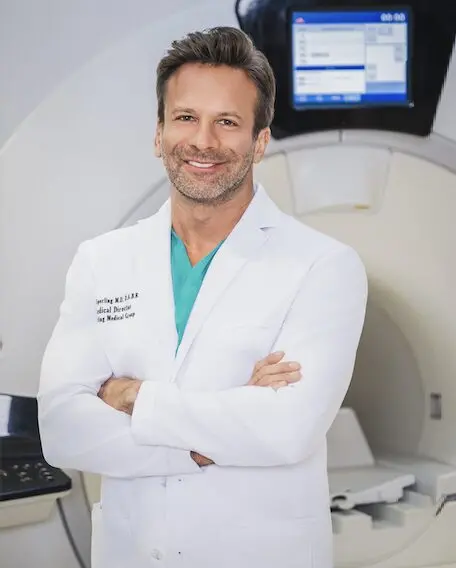
Dan Sperling, MD, DABR, is a board certified radiologist who is globally recognized as a leader in multiparametric MRI for the detection and diagnosis of a range of disease conditions. As Medical Director of the Sperling Prostate Center, Sperling Medical Group and Sperling Neurosurgery Associates, he and his team are on the leading edge of significant change in medical practice. He is the co-author of the new patient book Redefining Prostate Cancer, and is a contributing author on over 25 published studies. For more information, contact the Sperling Prostate Center.