
I grew up in a four-season climate, one in which the winter months with their gloomy days, long nights, difficulties dealing with snow and ice, and barren trees often seemed to drag on. The first signs of spring—buds on trees, robin sightings, and more daylight hours were always welcome. We felt re-energized as we looked forward to the sunny warmth of summer.
The 2025 annual meeting of the American Urological Association was held April 26-29, a time when the vigorous blossoming of spring is at its primer. I came across conference highlight, a State of the Art Lecture titled “Focal Therapy in Prostate Cancer: Prime Time or Not Time?”
The lecture opened with an explanation of why focal therapy has finally emerged as a recognized prostate cancer (PCa) treatment. In reading it, I thought of the long history of surgery and radiation, diagnosis errors, and over-treatment that left countess patients in the winter-like coldness of impaired quality of life. What’s worse, even after going through radical prostatectomy—the treatment thought to offer the greatest hope of complete cancer removal—a 2017 study found rates of rising PSA as high as 34.3% at ten years after treatment, 44% at 15 years, and 52.7% at 20 years.[i] To me, this gives new meaning to the Shakespeare’s words from his play Richard III, “Now is the winter of our discontent…,” a period of gloom before brighter days.
The arrival of focal therapy brings a virtual springtime era to PCa treatment. The AUA lecture brought out key points or trends in the evolution of focal treatment, a process that began haltingly in the late 1990s with a handful of radiologists and urologists who first successfully applied focal therapy using freezing (cryoablation), in the face of a barrage of criticism and skepticism by the very Association that gradually accepted it during the last 25 years.
Focal therapy should come as no surprise. To explain why it came into existence and gained traction, here are the points identified by the speaker, Dr. Samir Taneja (NYU Langone Health):
- Current whole gland (radical) treatment options using surgery or radiation have had “perceived inadequacies” in terms of “marginal improvements in mortality” seen with screening
- Large-scale research studies (PIVOT and ProtecT) brought to light the risks of overtreatment, bringing “significant impact…on quality of life.”
- Both professionals and patients continue to long for a way to assure cancer control without damaging lifestyle, especially given “poor compliance with active surveillance, patient anxiety,” and knowing that some PCa that seems low risk can still turn lethal.
- New technologies now provide the necessary tools to qualify patients for focal therapy, and to deliver it (we can now diagnose the size, extent, location and risk level of a tumor, and use image guidance to target it with minimal-to-noninvasive ablation).
To summarize all of the above, I offer the extended quote from Shakespeare, “Now is the winter of our discontent Made glorious summer by this sun…” Dr. Taneja’s recap tells us why focal therapy is finally blossoming, promising qualified patients an alternative to the gloom and difficulties of radical treatment.
Please visit our treatment pages to learn more about our Center’s three MRI-guided focal treatments: Focal Laser Ablation (FLA), Transurethral Ultrasound Ablation of the Prostate (TULSA-PRO), and MRI-guided Focused Ultrasound (MRgFUS).
NOTE: This content is solely for purposes of information and does not substitute for diagnostic or medical advice. Talk to your doctor if you are experiencing pelvic pain, or have any other health concerns or questions of a personal medical nature.
References
[i] Liesenfeld L, Kron M, Gschwend JE, Herkommer K. Prognostic Factors for Biochemical Recurrence More than 10 Years after Radical Prostatectomy. J Urol. 2017;197:143–148.
About Dr. Dan Sperling
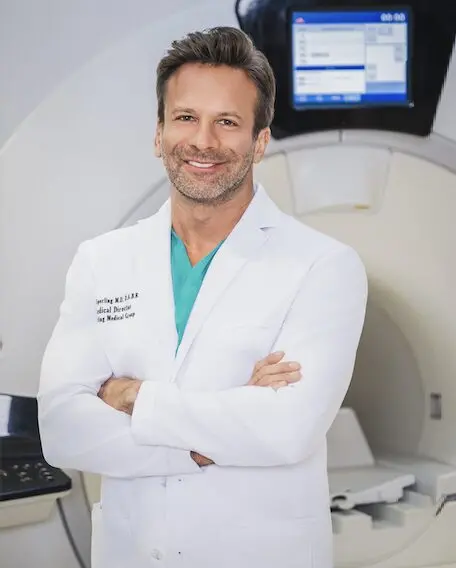
Dan Sperling, MD, DABR, is a board certified radiologist who is globally recognized as a leader in multiparametric MRI for the detection and diagnosis of a range of disease conditions. As Medical Director of the Sperling Prostate Center, Sperling Medical Group and Sperling Neurosurgery Associates, he and his team are on the leading edge of significant change in medical practice. He is the co-author of the new patient book Redefining Prostate Cancer, and is a contributing author on over 25 published studies. For more information, contact the Sperling Prostate Center.