
Originally published 10/19/2014
We’ve come a long way in focal therapy in the years since we published the blog below. Dr. Hash Ahmed’s 2014 published paper, as cited in the original blog, summarized compelling data that showed great promise for focal prostate cancer (PCa) treatment. Now, nearly a decade later, four authors from UCLA list several treatment methods with result statistics. Methods include:
high-intensity focused ultrasound, transurethral ultrasound ablation, focal laser ablation, focal cryotherapy, irreversible electroporation, and photodynamic therapy. Recurrence rates among all technologies were low to moderate (0-51%) and rates of freedom from radical treatment were highly variable (46-98%). Rates of erectile dysfunction and incontinence generally ranged from 0 to 44% and 0 to 12%, respectively, with variability between focal therapy modalities.[i]
Even though the UCLA paper was published in 2023, their list is incomplete. They don’t mention two established focal procedures: Exablate (MRI-guided focused ultrasound), a noninvasive treatment delivered under real-time MRI guidance, and TULSA-PRO, a minimally invasive transurethral procedure also done under real-time MRI guidance. These two treatments, together with our Center’s MRI-guided focal laser ablation, are FDA-approved. Thus, our Center benefits our patients with a suite of choices to ensure that each patient has the benefits of a “best match” procedure. Contact us for more information.
A hot-off-the-presses published review in the journal Urologic Oncology by Dr. Hashim Ahmed (Division of Surgery and Interventional Science, UCL, London) offers a comprehensive paper on focal therapy for prostate cancer.[ii] In addition to his clinical and research work, Dr. Ahmed has authored or co-authored scores of paper, and hold editorial and peer review positions with numerous professional journals. His work deserves respectful listening.
Dr. Ahmed boldly states that today’s diagnostic and therapeutic strategy for localized prostate cancer is “severely flawed and, as such, fraught with controversy.” He explains that this is the result of diagnostic techniques that are imprecise, leading to either overtreatment or undertreatment. He bemoans the consequences that radical (whole-gland) treatments have had on the quality of men’s lives, as they struggle to live with urinary, sexual or bowel dysfunction.
But there is hope, thanks to multiparametric MRI and its ability to guide diagnosis using an “intensive sampling strategy (targeted biopsies).” Citing the 90-95% negative predictive value of this approach (confidence that if no cancer is found, then it truly is not there), a greater number of patients may be candidates for focal therapy.
I will quote rather than paraphrase the data he includes in his article:
Current data from more than 3,000 men treated internationally show that incontinence after focal therapy is 0% to 5% (radical therapy can lead to incontinence in 15%-20%) whereas erectile dysfunction occurs in 5% to 10% of men with good baseline function (radical therapy rates vary between 30% and 60%). Early to medium cancer control using biopsies after treatment shows between 80% and 90% of patients have a successful treatment, with 10% to 15% of men requiring redo-treatment with minimal additional morbidity.
We are at a history-changing crossroads in the detection, diagnosis and treatment of localized prostate cancer. Our ability to distinguish insignificant from significant cancer is leaping forward, due not only to mpMRI but also genomic analysis. By contributing our Center’s 3T imaging abilities and our Focal Laser Ablation (FLA), we believe we are in the vanguard of a new world of prostate cancer. As our own database grows and we develop long term, publishable results, we expect our numbers to be at least as good as those cited by Dr. Ahmed.
NOTE: This content is solely for purposes of information and does not substitute for diagnostic or medical advice. Talk to your doctor if you are experiencing pelvic pain, or have any other health concerns or questions of a personal medical nature.
References
[i] Heard JR, Naser-Tavakolian A, Nazmifar M, Ahdoot M. Focal prostate cancer therapy in the era of multiparametric MRI: a review of options and outcomes. Prostate Cancer Prostatic Dis. 2023 Jun;26(2):218-227.
[ii] Ahmed HU. Introduction—Targeting the lesion, not the organ. Urol Oncol. 2014 aug;32(6):901-2.
About Dr. Dan Sperling
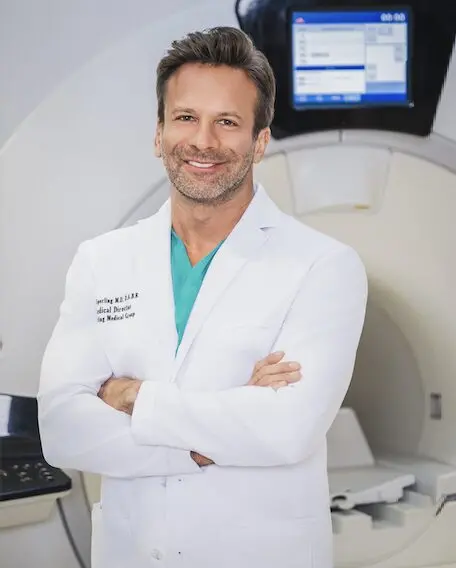
Dan Sperling, MD, DABR, is a board certified radiologist who is globally recognized as a leader in multiparametric MRI for the detection and diagnosis of a range of disease conditions. As Medical Director of the Sperling Prostate Center, Sperling Medical Group and Sperling Neurosurgery Associates, he and his team are on the leading edge of significant change in medical practice. He is the co-author of the new patient book Redefining Prostate Cancer, and is a contributing author on over 25 published studies. For more information, contact the Sperling Prostate Center.