I recently came across an opinion piece in Urology Times that got my attention: “After curative-intent treatment, prostate cancer recurrence is still an unmet need.” The author, Paul-Peter Tak MD, is a highly credentialed Dutch physician-scientist, immunologist, and biopharmaceutical executive. Though he is not a urologist, he is concerned that whole gland treatments—which are done with curative intent—do not come with a guarantee of lifetime success.
In his own words, Dr. Tak writes that “for a patient who chooses radical treatment with curative intent, progress should be judged by a simple, human question: Can I live the rest of my life without evidence that the cancer has returned? Too often, the answer is still uncertain.”
What does curative intent mean?
The expression curative intent means a treatment for localized prostate cancer (still contained in the gland) with a goal to remove or destroy all the cancer. “The established treatments with curative intent are radical prostatectomy, percutaneous radiotherapy, and brachytherapy…”[i]
These treatments are called radical because the entire prostate gland has been removed or eradicated. All prostate cells are gone, including the cancerous cells. If truly successful, the cancer will never come back. It is assumed that the patient was cured.
However, as Dr. Tak pointed out, there is never absolute certainty that all the cancer was eradicated. Since that is the case, after treatment patients must have PSA tests at prescribed intervals to monitor for signs that the cancer has recurred.
What is evidence that the cancer has returned?
The earliest evidence that cancer has recurred after treatment is a rise in PSA. This is called biochemical recurrence because PSA is a blood-based biomarker of prostate cell activity. Since there are no more functioning prostate cells after radical treatment, if PSA is rising it is assumed that the cancer is back, and the question becomes, where and how much of it is there?
How often does biochemical recurrence happen after radical treatment?
Biochemical recurrence after radical treatment usually does not show up right away, but within 10 years it occurs more often than you might think. After prostatectomy, 20–40% of patients develop biochemical recurrence within that time span.[ii] After radiation, rates vary depending on the type of radiation, the dose, and the cancer stage; one report found 10-year recurrence rates ranging from 34% for low-risk to 48% for intermediate risk.
Do patients who had radical treatment worry about recurrence?
Yes, worry about recurrence is common among post-treatment patients before each PSA monitoring test. They worry about a rising PSA because they would “have few treatment options, experience a heightened state of uncertainty about their disease trajectory that might include the possibility of cancer metastasis and death, and often experience elevated levels of distress as they have to deal with a disease they thought they had conquered.”[iii]
Dr. Tak applauds the great progress that has been made in detection, diagnosis, and ongoing advances in radical treatments. “At the same time, we should be equally careful not to confuse refinement with completion. The continued burden of recurrence tells us that the work is unfinished,” he states.
How can the situation be improved for patients?
According to Dr. Tak, there are four areas that must be addressed in order to improve the situation:
- While we all want survival, research should also focus on outcomes that patients want: “freedom from evidence of recurrence, metastasis, and additional therapy, together with quality of life.”
- Better ways to track and document whether curative-intent treatment “has truly controlled or eradicated disease. Prostate cancer can unfold over many years,” so important questions must be addressed and results reported earlier.
- Listen to how patients and partners define benefits. “Continence, sexual health, energy, cognition, bone health, emotional well-being, and freedom from treatment are not secondary concerns. They are part of the outcome.”
- Include population groups that are underrepresented in clinical trials, particularly Black men who appear to have a “disproportionate” prostate cancer burden.
Dr. Tak concludes with a strong call to action. “For men who choose radical treatment, success is not simply living longer after a recurrence. The aspiration is to live without evidence of recurrence, without symptoms from progressive disease, without metastases, and without years of additional treatment and its toxicities.” The Sperling Prostate Center supports this worthy patient-centered goal, one we can all work toward.
NOTE: This content is solely for purposes of information and does not substitute for diagnostic or medical advice. Talk to your doctor if you are experiencing pelvic pain, or have any other health concerns or questions of a personal medical nature.
References
[i] Knipper S, Ott S, Schlemmer HP, Grimm MO, et al. Options for Curative Treatment of Localized Prostate Cancer. Dtsch Arztebl Int. 2021 Apr 2;118(Forthcoming):228–36.
[ii] Bhargava P, Ravizzini G, Chapin BF, Kundra V. Imaging Biochemical Recurrence After Prostatectomy: Where Are We Headed? AJR Am J Roentgenol. 2020 Jun;214(6):1248-1258.
[iii] Shen MJ, Nelson CJ, Peters E, Slovin SF, Hall SJ, Hall M, Herrera PC, Leventhal EA, Leventhal H, Diefenbach MA. Decision-making Processes among Prostate Cancer Survivors with Rising PSA Levels: Results from a Qualitative Analysis. Med Decis Making. 2015 May;35(4):477-86.
About Dr. Dan Sperling
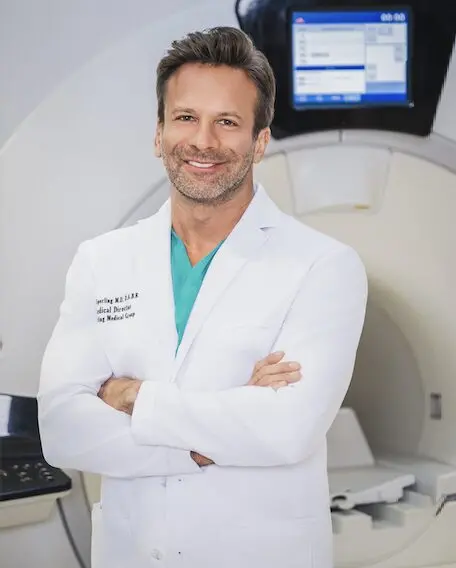
Dan Sperling, MD, DABR, is a board certified radiologist who is globally recognized as a leader in multiparametric MRI for the detection and diagnosis of a range of disease conditions. As Medical Director of the Sperling Prostate Center, Sperling Medical Group and Sperling Neurosurgery Associates, he and his team are on the leading edge of significant change in medical practice. He is the co-author of the new patient book Redefining Prostate Cancer, and is a contributing author on over 25 published studies. For more information, contact the Sperling Prostate Center.