
What are the two conventional approaches for newly diagnosed localized prostate cancer?
Men newly diagnosed with localized prostate cancer often find themselves in a decision-making fog. Traditionally, patients are faced with two choices: 1) treat the entire prostate and risk urinary or sexual side effects; or 2) go on Active Surveillance to monitor and risk growth of untreated cancer. It boils down to an all-or-nothing decision. As someone once said, if there’s only one choice, it’s a no-brainer; if there are two choices, it’s a dilemma.
Is there an alternative to an all-or-nothing decision?
Today, there is another choice. Focal therapy is a balanced alternative to all or nothing. Applying lethal energy to the primary tumor while avoiding key urinary and sexual structures gives the best of both worlds. The cancer is destroyed (goodbye and good riddance!) as it would be with surgery or radiation, but with very little risk to urinary or sexual function. Plus, the untreated prostate tissue can be monitored without fear of continued cancer growth.
Focal therapy success is durable. This was shown by a July 2026 published international study which found that success rates at 10 years are comparable to radical prostatectomy.[i] Also, New York University’s Department of Urology (NYU Grossman School of Medicine, New York) has now published 7-year cancer control data on 276 patients (favorable intermediate-risk disease) who had focal cryo.
Overall, 39 (14.1%) developed a csPCa recurrence. … There were no prostate cancer mortalities, and 3 (0.01%) developed metastasis. The [clinically significant prostate cancer] recurrence-free survival at 3, 5, and 7 years was 90.20%, 78.36%, and 70.31%, respectively.[ii]
Compare those numbers with a 2024 analysis of over 20,000 patients who had prostatectomy, in which the authors computed 28% recurrence at 10 years, and 20% metastasis at 10 years.
Is there only one way to do focal therapy?
No. Today there is a virtual menu of focal therapy methods: laser (Focal Laser Ablation, TPLA), freezing (cryo), ultrasound (HIFU, MRgFUS, TULSA), and electroporation (NanoKnife) are the most common.
How do patients feel about focal therapy?
Unlike whole gland therapies with side effects, focal therapy patients rarely have decision regret. Not only do they have peace of mind that the cancer is handled, they have significantly high rates of post-treatment urinary and sexual function compared to whole-gland therapies. On top of that, if their cancer comes back, all re-treatment options are still open.
Two years previous to the current NYU paper, the team published their 5-year results with focal cryo.[iii] At that time, Dr. Herb Lepor, Chair of the Urology Department and an author of both studies, was interviewed. A 2025 news story stated that “… his experience in having performed more than 5,000 whole-gland removals (radical prostatectomies) in his career, both argue that 80 percent of men with intermediate-risk disease would choose to undergo focal cryotherapy over prostatectomy if they had the choice.”
Thousands of patients have chosen focal therapy over prostatectomy, radiation, and Active Surveillance. As it first became available nearly 25 years ago, focal cryo was the only choice, then along came HIFU. Today, the entire landscape is more sophisticated, thanks to more powerful imaging and a wider array of focal therapy methods.
At the Sperling Prostate Center, we have a leading edge in this new landscape. Thanks to our 3T multiparametric MRI and our in-bore MRI-guided targeted biopsy, we offer the most accurate diagnosis available. In addition, our Center offers four state-of-the-art focal methods: Focal Laser Ablation, TULSA, Transperineal Laser Ablation, and Exablate MR-guided Focused Ultrasound. This means we can match treatment precisely to each patient’s unique clinical profile and lifestyle preferences.
In short, we provide the highest probable focal therapy success and durability with the highest patient satisfaction. Contact the Sperling Prostate Center for more information.
NOTE: This content is solely for purposes of information and does not substitute for diagnostic or medical advice. Talk to your doctor if you are experiencing pelvic pain, or have any other health concerns or questions of a personal medical nature.
References
[i] Light A, Peters M, Gopalakrishnan A, Mayor N et al. Oncological Outcomes Following Focal HIFU and Cryotherapy for Treatment of Nonmetastatic Prostate Cancer in the United Kingdom: An Updated Analysis of 3477 Patients from the Prospective HEAT and ICE Registries. Eur Urol. 2026 Jul 10:S0302-2838(26)02169-X.
[ii] Lepor H, Fiske J, Tafa M, Pirraglia E, Wysock JS. Focal Cryo-Ablation for Treatment of Intermediate Favorable Risk (Grade Group 2) Prostate Cancer. Urology. 2026 Jun 1:S0090-4295(26)00343-2.
[iii] Lepor H, Rapoport E, Tafa M, Gogaj R, Wysock JS. Five-year Oncologic Outcomes Following Primary Partial Gland Cryo-ablation Prospective Cohort Study of Men With Intermediate-risk Prostate Cancer. Urology. 2025 Feb;196:189-195.
About Dr. Dan Sperling
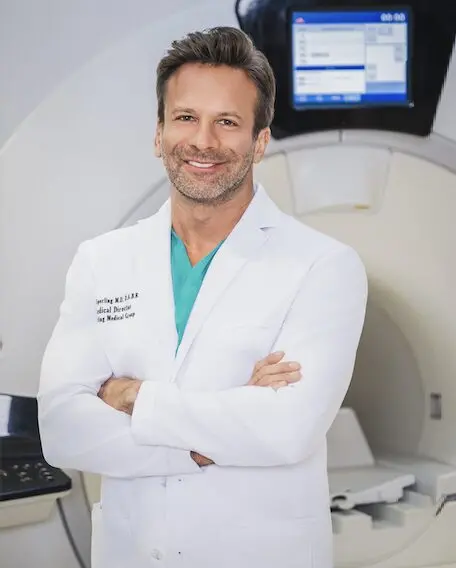
Dan Sperling, MD, DABR, is a board certified radiologist who is globally recognized as a leader in multiparametric MRI for the detection and diagnosis of a range of disease conditions. As Medical Director of the Sperling Prostate Center, Sperling Medical Group and Sperling Neurosurgery Associates, he and his team are on the leading edge of significant change in medical practice. He is the co-author of the new patient book Redefining Prostate Cancer, and is a contributing author on over 25 published studies. For more information, contact the Sperling Prostate Center.