SUMMARY:
Testosterone helps regulate prostate function and overall male health, but it is not known to cause prostate cancer. While prostate cancer cells can respond to testosterone, studies show that testosterone replacement therapy is safe and effective for men with testosterone deficiency when guided by appropriate testing and follow-up care. Selected prostate cancer patients, including those treated with focal therapy, may also be candidates for TRT under careful medical supervision.
What is testosterone and how is it connected with the prostate gland?
Testosterone is a hormone produced mainly in the testicles. It is the primary sex hormone for males.
As described by the Cleveland Clinic, hormones carry signals that “move through your blood to your organs, skin, muscles and other tissues. These signals tell your body what to do and when to do it. Hormones are essential for life and your health.”
In males, testosterone regulates the characteristics of masculinity. It also helps maintain total body wellness. Among its functions, it promotes libido (sex drive), supports muscle mass and bone density, and is essential for the production of sperm. It also affects a man’s energy level and mood.
Testosterone has an important connection with the prostate gland. Within each prostate cell is a protein called androgen receptor. When testosterone enters the cell, it binds with androgen receptor. This acts like a switch, influencing the growth, development, and maintenance of the prostate gland.[i],[ii]
Can testosterone turn normal prostate cells into cancer?
No, there is no evidence that testosterone converts normal prostate cells into cancer.
The Mayo Clinic reassuringly states, “Testosterone itself is not likely to increase a person’s risk of developing prostate cancer.” Rather, prostate cancer begins with mutations in a cell’s genes caused by a breakdown in its DNA. Testosterone at normal levels is not known to cause gene mutations or harm DNA.
However, when a prostate cell mutates into a prostate cancer cell, it contains androgen receptor since it originated from a normal cell. Thus, cancer cells take advantage of testosterone to support their own growth and activity. In other words, a cancer cell can use testosterone to fuel its own development.
Is testosterone replacement therapy (TRT) safe for men with low testosterone?
In general, the answer is yes, testosterone replacement therapy (TRT) is safe for men with low testosterone. Low testosterone, also called testosterone deficiency syndrome, is estimated to affect between 10-40% of men and is known to increase with age, with an abrupt rise in men aged 45–50 years.[iii]
Low testosterone affects a man’s quality of life. Symptoms include low sex drive, fatigue, sexual dysfunction, less muscle mass, mood changes, etc. However, since other conditions can cause such signs, a blood test is required to evaluate testosterone deficiency.
If testing reveals low testosterone, Dr. Eric Walser (Sperling Prostate Center) says:
You might be offered a “trial” of testosterone replacement therapy (TRT) to see if it improves your symptoms before committing to more chronic therapies. Remember that TRT can cause side effects, notably erythrocytosis (increased red blood cell production) which could put you at risk for blood clots. This level needs to be checked with periodic complete blood counts (CBC). Pesky issues like acne, hair loss, and testicular atrophy can mess with your aura. If you’re over 50, especially if you have a family history of prostate, breast or colon cancer, you will need a PSA test to screen for prostate cancer.[iv]
Research has shown that for men with proven low testosterone, testosterone replacement therapy is safe and highly effective at improving quality of life, but it requires appropriate testing and a doctor’s supervision to ensure safety.
If a prostate cancer patient has low testosterone, can he go on TRT?
This is a controversial topic. Since the early 1940s, it was firmly believed that TRT should never be prescribed for prostate cancer patients under any circumstance, but the work of Harvard urologist Dr. Abraham Morgentaler’s challenged that belief. For a brief history of the evolution in thinking, read Dr. Dan Sperling’s blog on the subject.
Over the last 10 years, a growing number of studies suggest that with careful monitoring, if a prostate cancer patient also has been diagnosed with testosterone deficiency, it may be appropriate to prescribe TRT. Two different situations have been clinically tested and appear safe with follow up.
The first situation is when testosterone deficient men who also have low risk (Grade Group 1-2) prostate cancer go on Active Surveillance. Recent research comparing low-risk patients on Active Surveillance with or without TRT found no difference in the rate of converting to treatment. The evidence failed to show that TRT made their cancer progress.[v],[vi]
The second situation is patients with both low testosterone and low-to-intermediate localized prostate cancer whose cancer has been treated with prostatectomy or radiation. Here again, studies show that TRT appears safe.[vii],[viii]
On a case-by-case basis, carefully qualified prostate cancer patients who will comply with strict monitoring may benefit from TRT to treat their low testosterone in the two situations described.
Can TRT be prescribed after focal therapy for patients with low T?
With appropriate precautions (thorough diagnosis including testosterone level, and qualified candidate for focal therapy) patients with testosterone deficiency may benefit from TRT after focal therapy. Only a doctor can determine if this is appropriate based on the patient’s clinical profile.
Since focal therapy like Focal Laser Ablation balances the advantages of cancer treatment with the high quality of life of Active Surveillance, the Sperling Prostate Center provides all the clinical services needed to monitor both cancer control and testosterone levels. Dr. Sperling embraces a team approach that includes the patient’s primary care physician and urologist, to ensure all of a patient’s needs are met.
Dr. Sperling and his experienced team take a “whole person” approach to caring for each patient. This means not just prostate health, but also each man’s masculinity and quality of life. For more information, contact the Sperling Prostate Center.
Frequently Asked Questions
Q: Why do patients with advanced prostate cancer need testosterone to be cut off?
A: Blocking testosterone, called androgen deprivation therapy (ADT), is prescribed for advanced prostate cancer. This means the cancer has already escaped the prostate gland, so a local treatment such as prostatectomy, whole gland radiation, or a focal therapy is no longer potentially curative. ADT cuts off and/or blocks testosterone from prostate cancer cells. This temporarily halts the cancer’s growth, but it is not a cure. However, ADT is a systemic (whole body) treatment that has side effects that demasculinize a man, lowering quality of life. Testosterone deficient patients who develop advanced prostate cancer should not be given TRT.
Q: Is there an advantage in testosterone boosting supplements for men with normal testosterone?
A: Since testosterone levels start to drop as men age, it is appealing to use over-the-counter testosterone supplements marketed as restoring youth, strength, vigor and sex drive. However, experts urge caution about promotional claims. Says a post from esteemed academic center Dartmouth, these supplements “have no confirmed effectiveness, are unregulated, and carry risks.”
On the other hand, studies support natural ways to stabilize or even increase testosterone levels during aging. Vigorous regular exercise, healthy eating and weight loss have been shown to raise testosterone levels, help slow aging-related declines, and boost libido, mood, and overall energy.
Content reviewed by Dr. Dan Sperling, M.D., DABR — updated June 2026.
NOTE: This content is solely for purposes of information and does not substitute for diagnostic or medical advice. Talk to your doctor if you are experiencing pelvic pain, or have any other health concerns or questions of a personal medical nature.
References
[i] Costello LC, Franklin RB. Testosterone, prolactin, and oncogenic regulation of the prostate gland. A new concept: Testosterone-independent malignancy is the development of prolactin-dependent malignancy! Oncol Rev. 2018 Jul 4;12(2):356.
[ii] Fujita K, Nonomura N. Role of Androgen Receptor in Prostate Cancer: A Review. World J Mens Health. 2019 Sep;37(3):288-295. doi: 10.5534/wjmh.180040.
[iii] Anaissie J, DeLay KJ, Wang W, Hatzichristodoulou G, Hellstrom WJ. Testosterone deficiency in adults and corresponding treatment patterns across the globe. Transl Androl Urol. 2017 Apr;6(2):183-191.
[iv] “This is Eric Walser, MD.” Reddit IAmA/Ask Me Anything, May 27, 2026. https://www.reddit.com/r/IAmA/comments/1toatls/this_is_eric_walser_md_i_am_a_interventional_and/
[v] Hussein AA et al., Roswell Park Cancer Institute. Prostate Cancer Active Surveillance Outcomes Unaffected by TRT. Reported in Renal and Urology News, January 2025.
[vi] Kaplan-Marans E, Zhang TR, Hu JC. Oncologic Outcomes of Testosterone Therapy for Men on Active Surveillance for Prostate Cancer: A Population-based Analysis. Eur Urol Open Sci. 2024;60:36–43.
[vii] Gibson J, George M, Grice P, Mohee A et al. Testosterone replacement therapy following definitive treatment for prostate cancer: a scoping review of safety and efficacy. Int J Impot Res. 2025 Nov 26. doi: 10.1038/s41443-025-01206-3.
[viii] Flores et al. (2024). Reported at the Society of Urologic Oncology (SUO) 2024 Annual Meeting. Summarized at UroToday: Testosterone Supplementation After Treatment for Localized Prostate Cancer. December 5, 2024.
About Dr. Dan Sperling
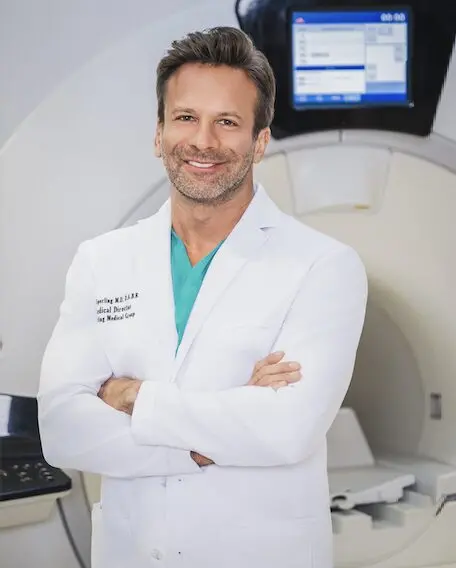
Dan Sperling, MD, DABR, is a board certified radiologist who is globally recognized as a leader in multiparametric MRI for the detection and diagnosis of a range of disease conditions. As Medical Director of the Sperling Prostate Center, Sperling Medical Group and Sperling Neurosurgery Associates, he and his team are on the leading edge of significant change in medical practice. He is the co-author of the new patient book Redefining Prostate Cancer, and is a contributing author on over 25 published studies. For more information, contact the Sperling Prostate Center.